As a parent to an 8-year-old neurodivergent girl, this question, and the title of this newsletter – What if Belonging Didn’t Require Fitting In? – has been sitting at the front of my mind lately.
And then, because I’m a big-picture thinker (sometimes to a fault!), my mind naturally starts to wander beyond our own family: What does an inclusive, truly accepting society actually look like?
Not a society where we ask people to work a little harder to fit in. Not one where we simply tolerate differences. But one where people can show up as they are—and feel understood, valued, and safe enough to belong.
I recently came across a powerful line in the book I’m currently reading, Neurodivergent Mind: Thriving in a World That Wasn’t Designed for You by Jenara Nerenberg, that stopped me in my tracks:
“In an inclusive society, you don’t have to fight to be understood or hide to be accepted.”
I love that. And it got me thinking:
What would it look like if that were actually true for our children?
For those of us raising neurodivergent kids, I think this question matters enormously. But let’s go one layer deeper – Whose experience are we using as the model?
Lately, I’ve become increasingly curious about how neurodivergence—particularly autism—can present in girls and women.
Many of us grew up with a fairly narrow picture of what autism “looks like.” Maybe you picture a boy who is fascinated by trains, struggles with eye contact, prefers routines, or has noticeable repetitive behaviors.
That image didn’t come from nowhere. Historically, autism research has disproportionately focused on boys and men, which has shaped many of the models and expectations we now use to recognize autism.
And when our mental model is too narrow, we can miss the child standing right in front of us.
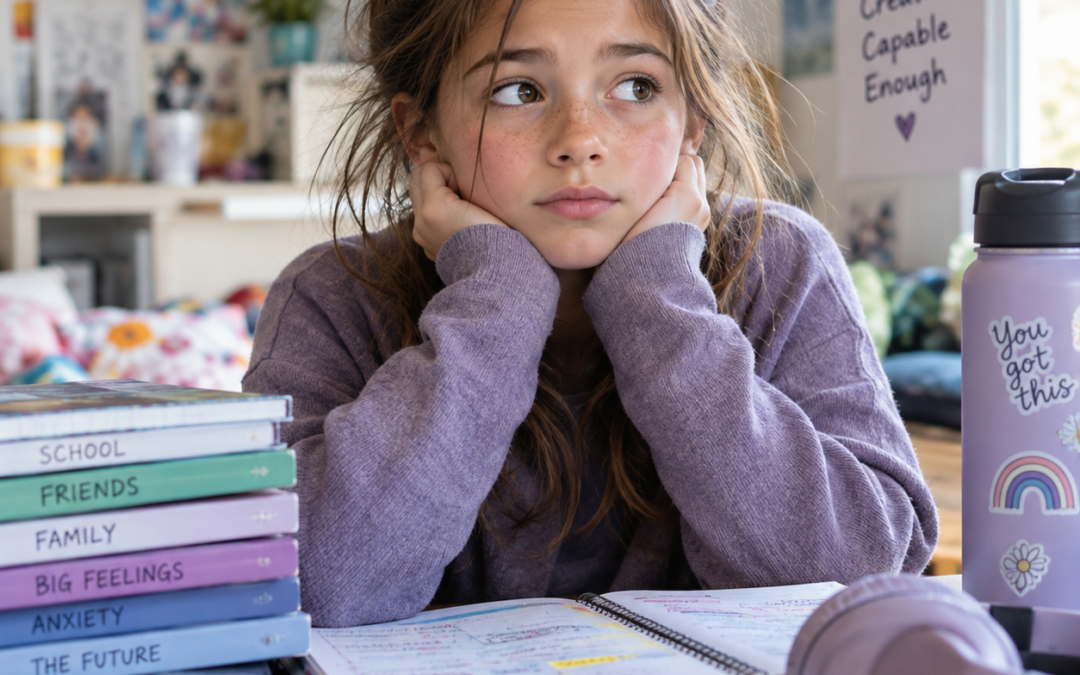
Some girls and women may mask, imitate peers, internalize their struggles, or become incredibly skilled at appearing as though everything is fine—while expending enormous energy underneath the surface.
Sometimes what we see instead is perfectionism. Or anxiety. Or emotional exhaustion after holding it together all day. Or sensory overwhelm. Or difficulty navigating the unwritten rules of friendships and social situations. (Or all of this and that’s why it’s feeling so challenging for us to tease apart what’s really going on!)
Of course, there is no single way that neurodivergence presents in girls—or in anyone. Boys can mask, internalize their struggles, and experience these same challenges, too.
Neurodivergence is wonderfully heterogeneous. But it’s worth asking ourselves whether the lens we’re using is broad enough to actually see our individual child.
Maybe inclusion starts with curiosity.
Parents, you do not need to become an expert in every possible presentation of autism, ADHD, sensory differences, anxiety, learning differences, or anything else. Yes. Read that again.
You don’t have to know everything. But you can get curious.
Instead of:
“Why can’t my child just…?”
we might try:
“What might I be missing?”
Instead of assuming a child is being oppositional, dramatic, lazy, attention-seeking, or overly sensitive, we can pause and wonder: “What is this behavior communicating?”
And instead of focusing only on whether our child can successfully adapt to the environment, we can ask: “What could we change about the environment so my child doesn’t have to work quite so hard to belong?”
That shift may seem small. But it can change the way we see our children—and the way we respond to them.
Because maybe the goal isn’t to teach our children how to hide the parts of themselves that make other people uncomfortable.
Maybe the goal is to build families, schools, friendships, and communities where they don’t have to hide in the first place. Where differences aren’t something you have to overcome before you earn belonging. Where being understood isn’t something you have to fight for.
And where acceptance doesn’t come with the condition that you first become easier for everyone else to be around.
That’s the kind of inclusion I want to keep learning how to create—in community with you—for our children and for ourselves.
And honestly? You don’t have to figure out what that looks like on your own.
Sometimes, knowing we want to parent differently is easier than knowing how to actually do it.
Through 1:1 parent coaching, I work with families to better understand their child, identify the places where things are getting stuck, and develop practical strategies and adaptations that actually fit your child and your family.
And through my parent support groups, you have the opportunity to connect with other parents who are navigating many of these same questions—to share experiences, learn together, and remember that you are not alone in this.